How to Coach Employees at Work Without Slipping Into Telling Them What to Do
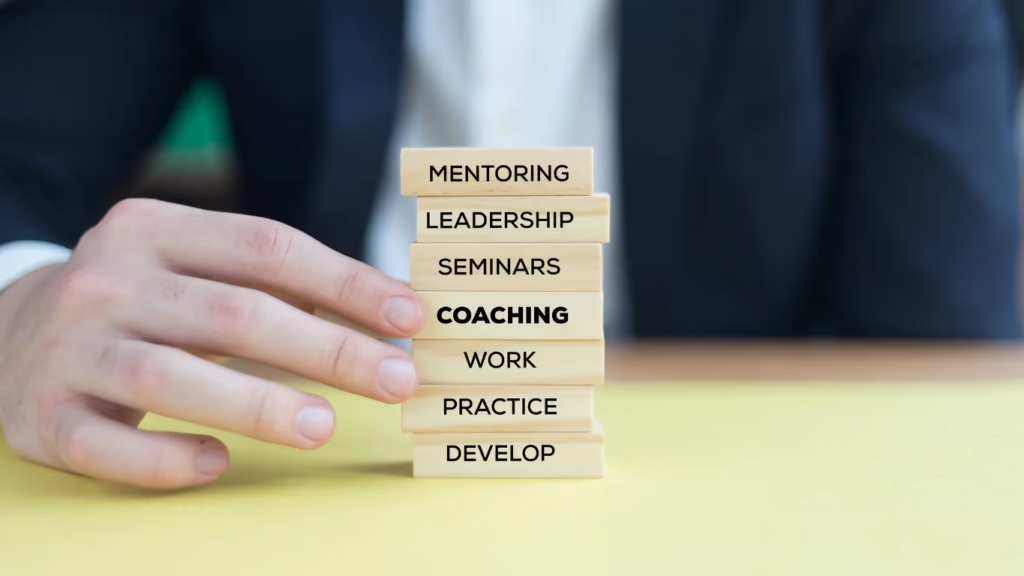
Most managers want to master how to coach employees at work but within minutes of sitting down with a team member, they slide back into advice-giving and telling people exactly what to do next. Developing real manager coaching skills requires you to first understand why coaching vs directing employees feels so uncomfortable at the start, then equip yourself with powerful coaching questions for managers that replace the urge to instruct with the habit of inquiry. Do this consistently, and you will find yourself building a coaching culture at work that changes not just individual performance but the entire way your team thinks, collaborates, and solves problems independently.
Key Takeaways
- Most managers struggle with how to coach employees at work, often defaulting to advice-giving instead of fostering inquiry.
- Coaching develops employee independence and problem-solving skills, while directing often leads to dependency and diminished confidence.
- To effectively coach, managers should commit to asking questions, follow a clear structure like GROW, and resist redirecting team members’ solutions.
- Use powerful questions that deepen thinking and move towards action, turning insights into concrete commitments.
- Building a coaching culture requires visibility, consistency, and recognizing team members’ coaching efforts, shifting communication dynamics significantly.
Why Managers Default to Telling Instead of Coaching
The pull towards telling is entirely natural. You became a manager because you were good at your job. You built expertise, solved problems quickly, and delivered results. Consequently, when a team member brings you a challenge, your instinct is to reach into that expertise and hand them the answer. It feels efficient. It feels helpful. In most cases, however, it is the wrong move.
The Hidden Cost of Always Having the Answer
Every time you give a team member the answer, you solve their problem once. Every time you coach them through finding the answer themselves, you build a capability they carry forward. The short-term cost of coaching is time and patience. The long-term return, however, is a team that thinks independently, escalates less frequently, and performs with far greater consistency.
Furthermore, managers who default to directing often create dependency without realising it. Team members stop thinking through problems because they expect the manager to think for them. Over time, this pattern quietly erodes confidence and initiative two qualities that are very difficult to rebuild once lost.
Key insight: The moment you give someone the answer, you take ownership of the problem away from them. Coaching returns that ownership and with it, the accountability and motivation that drive real performance.
Coaching vs Directing Employees Understanding the Core Distinction
The difference between coaching vs directing employees is not a matter of tone or style. At its core, it represents a fundamentally different operating model for your role as a manager.
What Directing Actually Looks Like in Practice
Directing means you provide the solution, the plan, or the next step. You tell the team member what to do, how to do it, and when to have it complete. This approach works well in genuine emergencies and with brand new team members who lack foundational knowledge. In those specific contexts, directing is not just acceptable it is correct.
What Coaching Looks Like Instead
Coaching, in contrast, means you ask questions that help the team member think through the situation themselves. You surface their existing knowledge, challenge their assumptions, and help them identify their own next steps. The coach does not need all the answers. In fact, the best coaching conversations happen precisely when the manager resists the urge to share what they know.
Therefore, the key is not to choose between coaching and directing permanently. Rather, it is to know which approach the situation demands and to choose deliberately rather than defaulting to direction out of habit.
When Directing Is the Right Choice
Directing is appropriate when a team member is brand new to a task, when the situation carries significant risk, or when time constraints make a full coaching conversation impractical. In these cases, direct clearly and without apology. The mistake most managers make is directing in situations where coaching would serve better not the reverse.
How to Coach Employees at Work The Practical Foundation
Knowing how to coach employees at work begins with one commitment: ask before you tell. The commitment sounds deceptively simple. In practice, it requires you to override years of habit and a deeply held belief that a manager’s job is to have the answers. Many managers find this the hardest barrier to overcome.
Using a Structure to Guide Every Coaching Conversation
The most effective coaching conversations follow a clear structure. Oneopen by understanding the situation from the team member’s perspective. You explore the options they can already see. You help them identify what they will do next. Then you agree on how and when you will follow up.
This structure associated with the GROW model (Goal, Reality, Options, Will) gives you a reliable framework for any coaching conversation. Practising it consistently builds the muscle memory that makes coaching feel natural rather than forced.
Managing Your Own Reactions During the Conversation
Effective coaching also requires you to manage your reactions in the moment. When a team member suggests a solution that differs from your preference, your instinct may be to redirect them immediately. Resist it. If their solution is workable, let them own it. The quality of the relationship matters more than the elegance of the specific approach they select.
The Coaching Skills for Managers Training at Synergogy gives managers a structured, practical framework for doing exactly this with real conversation practice built into every session so you leave with skills you apply immediately.
Powerful Coaching Questions for Managers The Toolkit You Need
Powerful coaching questions for managers are the engine of every effective coaching conversation. The right question opens thinking, challenges assumptions, and moves the team member from stuck to unstuck in a single exchange. A poorly chosen question shuts the conversation down and signals that you already have an answer in mind.
Questions That Open the Conversation
Start every coaching conversation by establishing what the team member wants to achieve. Useful openers include: “What would you like to leave this conversation having figured out?” and “What is the most useful thing we could focus on right now?” These questions immediately transfer ownership of the conversation to the team member — which is exactly where it belongs.
Questions That Deepen Thinking
Once the team member has shared their situation, your job is to help them think more thoroughly. Useful questions at this stage include: “What have you already tried?” “What is stopping you from taking that approach?” and “What would you do if you knew you could not fail?” Each of these invites reflection rather than reporting, which is where real development happens.
Questions That Move Towards Action
As the conversation progresses, shift to questions that convert insight into commitment. “What will you do next, and by when?” “What support do you need from me?” and “How will you know this has worked?” these questions turn a good conversation into a concrete plan. Consequently, the team member leaves with clarity and accountability that no amount of directing can produce as reliably.
Mastering powerful coaching questions for managers is not about memorising a list. It is about developing the instinct to ask before you tell. The Coaching Skills for Managers Training at Synergogy builds this instinct through live conversation practice, feedback, and repetition across a focused learning sprint.
Building a Coaching Culture at Work From Individual Skill to Team Habit
Building a coaching culture at work is what happens when individual manager coaching skills multiply across a team, a department, or an entire organisation. At that point, coaching stops being something you do in a scheduled one-on-one. It becomes the default way your team communicates, solves problems, and supports each other every day.
How to Make Your Coaching Behaviour Visible to the Team
A coaching culture does not appear by itself. You build it through consistency and visibility. Your team members watch how you operate. When they observe you asking questions rather than providing answers, they naturally adopt the same approach with their colleagues. When they experience being coached rather than directed, they understand it is safe to think out loud and bring problems forward.
Furthermore, building a coaching culture at work requires you to protect the conditions that make coaching possible. Create time for proper one-on-one conversations. Resist organisational pressure to fix everything quickly. Instead, invest in the slower, more durable process of developing people. Be patient with yourself as your manager coaching skills strengthen over time.
Reinforcing Coaching Across the Whole Team
The fastest way to embed a coaching culture is to make your own behaviour visible. When a team member asks for an answer, respond with a question in front of others where appropriate. When you facilitate team meetings, ask the group what they think before sharing your own view. Over time, this behaviour becomes the team’s norm rather than the exception.
Additionally, celebrate moments when team members coach each other. Recognise publicly when someone asks a great question that unlocks a colleague’s thinking. This reinforces that coaching is valued, expected, and noticed — all three of which are necessary for culture change to stick.
For organisations serious about embedding this shift across multiple teams and leadership levels, the Micro Learning Labs™ at Synergogy offer a full suite of focused, practical programmes that develop coaching capability alongside complementary management skills.
How to Coach Employees at Work in 5 Steps
- Commit to asking before telling
Before each conversation, commit to asking at least two questions before sharing your view. This helps break the habit of jumping in with answers and encourages real listening.
- Use a coaching structure to guide the conversation
Follow the GROW model: Goal, Reality, Options, Will. Agree on the goal, explore the current situation, generate possible actions, and confirm what they will do next and by when.
- Ask powerful questions that deepen thinking
Use questions that expand thinking, not close it down: “What have you tried?” “What is stopping you?” “What would you do if you had full authority?” Strong questions build ownership and better solutions.
- Resist the urge to redirect when they choose differently than you would
If they choose a workable option that differs from yours, let them own it. Coaching is about developing their judgment, confidence, and accountability.
- Follow up on every coaching commitment
End with a clear commitment and timing. Then reconnect to ask what happened, what they learned, and what they would change. That follow-up makes the coaching real.
Conclusion : The Manager Who Asks Is the Manager Who Develops People
Why Persisting Through the Discomfort Is Worth It
Learning how to coach employees at work is not a skill you acquire in a single training session and then apply perfectly from that point forward. It is a practice one that you develop through repeated conversations, deliberate reflection, and a genuine commitment to putting your team’s thinking before your own expertise.
The shift from directing to coaching is uncomfortable at first. Questions feel slower than answers. Silence feels less productive than instruction. However, the managers who persist through that discomfort discover something that transforms their leadership: a team that thinks independently, solves problems confidently, and performs consistently without needing their manager to have every answer.
Building a coaching culture at work, developing genuine manager coaching skills, and mastering powerful coaching questions for managers all begin with the same first step deciding that your role is to grow people, not just to get things done.
The Coaching Skills for Managers Training at Synergogy is the structured, practical next step. Explore the programme today or reach out directly at info@synergogy.com to discuss how this training fits your team’s current needs and development goals.
Frequently Asked Question
Coaching employees at work means asking questions that help your team members think through challenges and identify their own solutions — rather than providing the answer yourself. It is a deliberate approach to management that builds capability, confidence, and ownership in the people you lead. Unlike directing, coaching treats the team member as the expert in their own situation and positions the manager as a thinking partner rather than an instruction-giver.
Directing means you tell the team member what to do, how to do it, and when to complete it. Coaching means you ask questions that help them work through the situation and identify their own next steps. Both approaches have their place — directing works best for brand new team members or genuine emergencies, while coaching works best for developing capability, building confidence, and increasing ownership in experienced team members. The key is choosing the right approach deliberately rather than defaulting to direction out of habit.
Frequently Asked Question
Start with one commitment: ask at least two questions before offering any perspective in every team conversation. This single habit begins to shift your default from directing to coaching. Over time, practise using a simple coaching structure like GROW — Goal, Reality, Options, Will — to give your conversations a clear shape. Structured training, such as the Coaching Skills for Managers Training at Synergogy, accelerates this shift significantly by providing live practice, feedback, and a framework you can apply immediately.
Building a coaching culture at work is a medium-term investment — most teams begin to notice a shift in how they communicate and problem-solve within three to six months of consistent manager coaching behaviour. The speed of change depends on how visibly and consistently the manager models coaching behaviour, how frequently one-on-one coaching conversations happen, and whether the organisation reinforces coaching as a valued management practice. Individual manager coaching skills can develop much faster — often within a single focused training programme.