- AI Certifications
AI+ Cloud Practitioner™
This globally recognized 𝗔𝗜+ 𝗖𝗹𝗼𝘂𝗱 𝗣𝗿𝗮𝗰𝘁𝗶𝘁𝗶𝗼𝗻𝗲𝗿™ by AI CERTs® equips professionals with essential knowledge to design, deploy, and manage artificial intelligence solutions on cloud platforms—enabling them to confidently begin their journey into scalable, secure, and AI-powered cloud computing

AI+ Cloud Practitioner™
Synergogy, the Authorized Training Partner (ATP) of AI Certs, brings you this globally recognized 𝗔𝗜+ 𝗖𝗹𝗼𝘂𝗱 𝗣𝗿𝗮𝗰𝘁𝗶𝘁𝗶𝗼𝗻𝗲𝗿™ by AI CERTs® equips professionals with essential knowledge to design, deploy, and manage artificial intelligence solutions on cloud platforms—enabling them to confidently begin their journey into scalable, secure, and AI-powered cloud computing.
- Format: Self paced online course.
- Level: Prepares professionals to lead AI-powered cloud innovation
- Certificate: 𝗔𝗜+ 𝗖𝗹𝗼𝘂𝗱 𝗣𝗿𝗮𝗰𝘁𝗶𝘁𝗶𝗼𝗻𝗲𝗿™ Certification by AI Certs®.
- Partner: Delivered by Synergogy as an ATP for AI Certs.


AI+ Cloud Practitioner™
This course includes
- Online Self-Paced Learning
- Online Proctored Exam with 1 Free Retake
- Digital Badge
- High-Quality Videos, E-books, and Podcasts
- Access for Tablet & Phone
- Capstone Projects
- Case Studies
- Quizzes & Assessments
- AI Mentor for Personalized Guidance
Why This Certification Matters
- AI-Driven Leadership for Smarter Decisions
Develop the ability to apply AI tools that streamline operations, strengthen strategic planning, and improve organizational performance. - Accelerating Enterprise AI Adoption
Learn how to scale and integrate AI-driven solutions across the organization, enabling automation, efficiency, and faster innovation. - Staying Competitive in an AI-First Economy
As demand for advanced AI expertise grows, leaders with strong AI knowledge are increasingly sought to champion transformation and innovation initiatives. - Data-Backed Strategy Through AI Analytics
Gain proficiency in AI-powered analytics to interpret business data, forecast outcomes, and support faster, more informed decision-making in real time. - Advancing Careers in AI Leadership
Position yourself to lead high-impact AI initiatives as industries evolve, with skills that support executive influence, organizational change, and long-term growth.
- Cloud Professionals: Strengthen cloud management capabilities by applying AI to optimize performance, improve resource efficiency, and streamline operations.
- Cloud Architects and Engineers: Learn how to design scalable, secure cloud architectures using AI-driven automation, intelligent provisioning, and advanced optimization techniques.
- IT Infrastructure Managers: Leverage AI to enhance cloud deployment strategies, automate system administration, and improve security, resilience, and disaster recovery planning.
- Business Leaders: Drive organizational innovation by integrating AI into cloud strategies to increase scalability, reduce operational costs, and maximize the value of cloud investments.
- Students and Early-Career Professionals: Build a competitive advantage by mastering AI-powered cloud tools and techniques that are transforming modern cloud infrastructure.
- TensorFlow
- SHAP (SHapley Additive exPlanations)
- Amazon S3
- AWS SageMaker
- A foundational understanding of key concepts in both artificial intelligence and cloud computing.
- Fundamental understanding of computer science concepts like programming, data structures, and algorithms.
- Familiarity with cloud computing platforms like AWS, Azure, or GCP.
- Basic knowledge of mathematics as it important for machine learning, which is a core component of AI+ Cloud™ program.
- Fundamentals of Artificial Intelligence (AI) and Cloud – 5%
- Introduction to Artificial Intelligence – 7%
- Fundamentals of Cloud Computing – 8%
- AI Services in the Cloud – 10%
- AI Model Development in the Cloud- 15%
- Cloud Infrastructure for AI – 15%
- Deployment and Integration – 15%
- Future Trends in AI + Cloud Integration – 20%
- Capstone – 5%
What You'll Learn
1: Fundamentals of AI and Cloud
Core concepts of artificial intelligence and cloud computing
How AI and cloud technologies complement each other
Business and technology benefits of AI–cloud integration
Security and privacy considerations in cloud-based AI
2: Introduction to Artificial Intelligence
Fundamentals of AI, Machine Learning (ML), and Deep Learning
Key AI algorithms and real-world use cases
Natural Language Processing (NLP) and computer vision basics
Python programming and essential AI libraries (NumPy, Pandas, Scikit-learn)
3: Fundamentals of Cloud Computing
Cloud service models: IaaS, PaaS, SaaS
Cloud deployment models: public, private, and hybrid
Overview of major cloud providers (AWS, Azure, Google Cloud)
Selecting cloud services for AI workloads
4: AI Services in the Cloud
Cloud-based AI services and APIs
Pre-built ML models and managed AI tools
Implementing NLP, image recognition, and vision services
Integrating AI services into cloud applications
5: AI Model Development in the Cloud
Building and training ML models in cloud environments
Traditional ML vs AutoML approaches
Model optimization, evaluation, and versioning
Collaborative development using Git and cloud tools
6: Cloud Infrastructure for AI
Infrastructure as Code (IaC) for AI workloads
GPUs, TPUs, and performance optimization
Auto-scaling and resource management for ML systems
Data storage, encryption, compliance, and security
7: Deployment and Integration
Deploying AI models on cloud platforms
Deployment strategies (blue-green, canary releases)
Microservices and API-based AI integration
Monitoring, testing, and managing AI APIs
8: Future Trends and Hands-On Applications
Emerging trends: Explainable AI (XAI), Federated Learning, Edge AI
Serverless AI, MLOps, and AutoML advancements
Ethical AI and responsible cloud AI practices
Hands-on projects and real-world cloud AI use cases
Bring our
AI+ Foundation™ Course in-house
Interested in getting your team started with the AI Foundation Course, fully customised for your team?

FAQs - AI+ Cloud Practitioner™
-
1. What is the AI+ Cloud Practitioner™ Certification?
The 𝗔𝗜+ 𝗖𝗹𝗼𝘂𝗱 𝗣𝗿𝗮𝗰𝘁𝗶𝘁𝗶𝗼𝗻𝗲𝗿™ by AI CERTs® is a globally recognized program designed to equip professionals with the skills to build, deploy, and manage artificial intelligence solutions on modern cloud platforms.
-
2. Who should enroll in the AI+ Cloud Practitioner™ course?
This certification is ideal for cloud professionals, cloud architects, engineers, IT infrastructure managers, business leaders, and students who want to apply AI to cloud environments for automation, scalability, security, and performance optimization.
-
3. What skills will I gain from the AI+ Cloud Practitioner™ Certification?
Learners gain practical skills in cloud-based AI services, AI model development and deployment, cloud infrastructure optimization, automation, MLOps fundamentals, security, and integrating AI into enterprise cloud architectures.
-
4. Are there any prerequisites for the AI+ Cloud Practitioner™ Certification?
No formal prerequisites are required. A basic understanding of cloud computing concepts or IT infrastructure is helpful but not mandatory, as the course introduces AI and cloud concepts progressively.
-
5. How does the AI+ Cloud Practitioner™ Certification support career growth?
The certification validates in-demand skills at the intersection of AI and cloud computing, helping professionals advance into roles such as cloud architect, AI cloud engineer, MLOps specialist, and technology leader driving AI-powered cloud initiatives.
Our Blog


10 Steps to Build Personal Resilience When Organisational Change Feels Relentless
Explore effective strategies for building personal resilience during organisational change and thrive in challenging times.

5 Ways to Deliver Bad News to a Client Without Losing the Relationship
Learn how to deliver bad news to a client without losing the relationship. Understand the
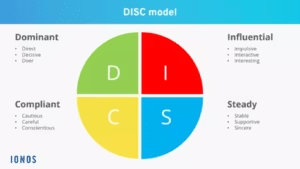
5 Ways to Adapt Your Communication Style to Every Personality Type Using DISC
Learn how adapting communication style using DISC can enhance workplace interactions and resolve conflicts effectively.

10 Steps to Build a Team Culture Where People Speak Up Without Fear
Create a team culture where people speak up to foster innovation, engagement, and open communication